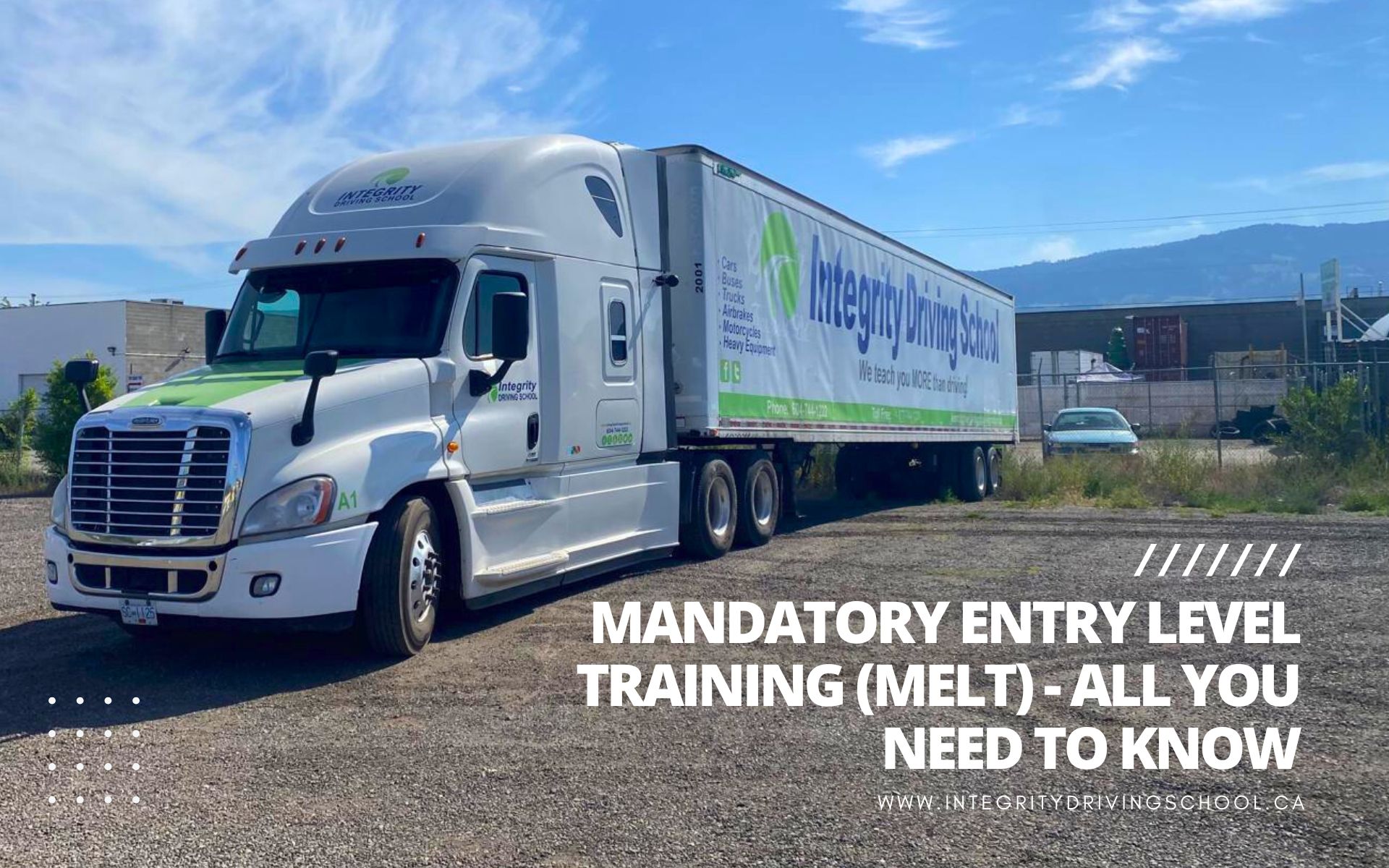
If you’re planning to start a professional trucking career in British Columbia, understanding the Mandatory Entry-Level Training (MELT) program is essential. Introduced to improve road safety and ensure consistent, high-quality commercial driver education, MELT has become a crucial step for anyone pursuing a Class 1 commercial driver’s licence.
What Is MELT?
The Mandatory Entry-Level Training (MELT) program is a government-approved training requirement for anyone seeking a Class 1 licence in BC — which qualifies you to operate semi-trucks and other large commercial vehicles.
This program ensures all new commercial drivers receive standardized, comprehensive training before hitting the road. MELT combines both classroom instruction and behind-the-wheel experience, helping you build the skills, confidence, and knowledge needed for safe long-haul and local driving.
Why Was MELT Introduced?
Before MELT, driver training standards varied widely across schools. Some new drivers entered the workforce without adequate safety knowledge or real-world driving practice. To address this, ICBC and the BC Ministry of Transportation implemented MELT to:
- Standardize commercial driver education across the province.
- Reduce preventable road accidents.
- Improve road safety for all motorists.
- Prepare new drivers for the Class 1 ICBC road test and real-world conditions.
What Does the BC MELT Program Include?
In British Columbia, the MELT Class 1 program requires a minimum of 140 hours of instruction, which includes:
- Theory/Classroom (36 hours): Road safety, regulations, trip planning, vehicle components, and professional conduct.
- In-Yard Training (19 hours): Pre-trip inspections, air brakes, and coupling/uncoupling procedures.
- On-Road Training (85 hours): Real-world experience in city, highway, day, and night conditions under various traffic situations.
Training must be completed through an ICBC-approved driver training school, such as Integrity Driving School, which ensures you meet or exceed all MELT standards.
Benefits of MELT Training
- Improved Safety Awareness – Learn defensive driving, hazard perception, and emergency procedures.
- Professional Readiness – Get trained like an industry professional under realistic conditions.
- Higher Employability – Many carriers prefer or require MELT-certified drivers.
- Insurance & Compliance Advantage – MELT graduates are seen as lower risk by employers and insurers.
- Confidence Behind the Wheel – Hands-on practice in various environments ensures you’re truly road-ready.
Who Needs to Take MELT?
You must complete MELT if you are:
- Applying for a Class 1 commercial driver’s licence in BC for the first time.
- Converting an out-of-province or out-of-country licence to a BC Class 1.
(If you already hold a valid Class 1 licence issued before the MELT mandate, you are exempt.)
Financial Support & Funding Options
Many schools, including Integrity Driving School, offer:
- Flexible financing options
- Government grants and tuition reimbursements
- Tax-exempt commercial programs
These supports help make your training more affordable while ensuring you receive top-quality education.
How to Get Started
Ready to begin your professional driving career? Here’s how:
- Contact an ICBC-approved driving school (like Integrity Driving School).
- Book a consultation to discuss course options and pricing.
- Complete your 140-hour MELT training.
- Pass your ICBC Class 1 Road Test.
Once certified, you’ll be fully qualified to operate heavy commercial vehicles and begin a rewarding career in Canada’s growing transportation industry.
Start Your Journey with Integrity Driving School
At Integrity Driving School, we’re proud to provide ICBC-approved Class 1 MELT training in Kelowna, Surrey, Abbotsford, Prince George, Kamloops, and Chilliwack.
Our programs go beyond the basics — combining classroom learning with extensive on-road experience to help you succeed in today’s competitive trucking industry. Call 604-744-1222 or 1-877-744-1231 for a free, no-obligation consultation.